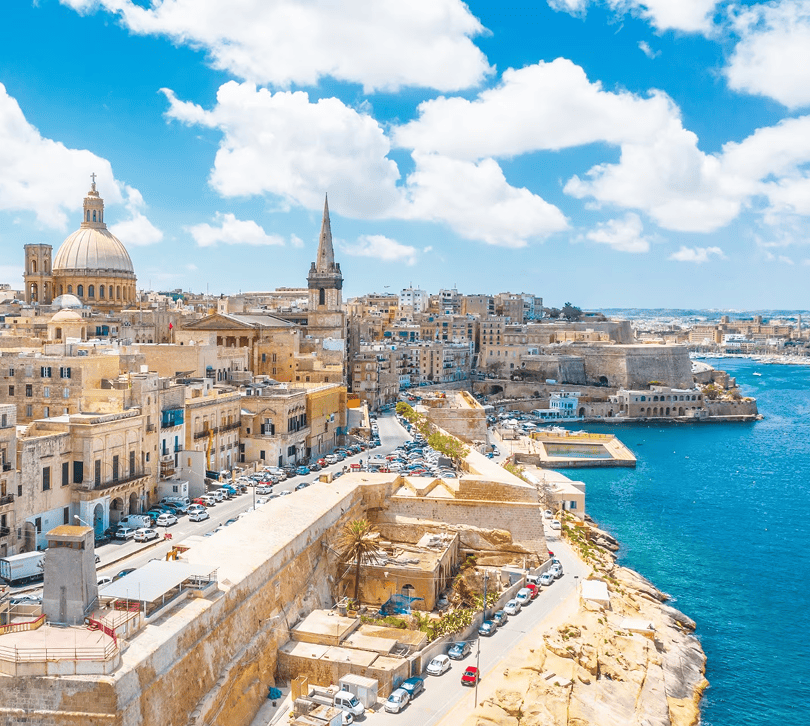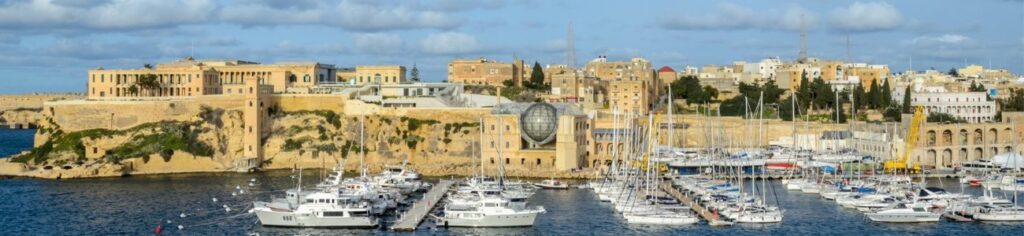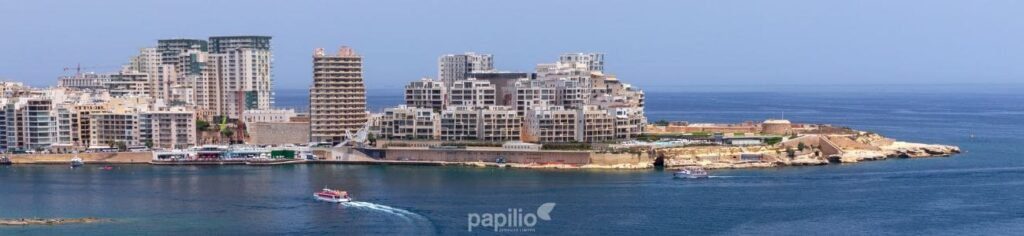

In its latest global ranking, Forbes has once again recognised Malta as one of the top destinations for Americans and international retirees in 2026. The annual report, “The Best Places To Retire Abroad in 2026”, evaluates 96 recommended retirement locales across 24 countries, considering cost of living, healthcare quality, climate risk, safety, taxation, and how welcoming each country is to U.S. retirees. Malta’s continued presence on this list underscores its strong performance across all major criteria.
The trend of Americans retiring abroad continues to accelerate. As of the latest count, 712,000 Americans were receiving Social Security benefits while living overseas, a 20% increase over the past 13 years. Motivations include increasing living costs in the United States, a desire for a more relaxed lifestyle, and growing interest in culturally rich, stable environments.
Why Malta Continues to Stand Out in 2026
English as an Official Language
Malta’s bilingual environment, English and Maltese, remains one of its strongest advantages. Forbes highlights language accessibility as a major determinant of retirement success, and Malta’s widespread use of English ensures seamless communication and integration for American retirees.
High-Quality Healthcare System
Malta’s healthcare system continues to rank among Europe’s most reliable. Both public and private healthcare options offer high standards of care at significantly lower costs than in the United States.
Mediterranean Climate
With over 300 days of sunshine per year, Malta offers a stable Mediterranean climate with comparatively low climate risk. Forbes notes that several destinations were removed from the 2026 list due to wildfire and heatwave concerns, yet Malta remains a secure and resilient option.
Safety and Political Stability
Malta consistently ranks among Europe’s safest countries, with low violent crime rates and a stable political environment, key considerations for retirees seeking long-term security.
Ease of Travel and Improved Connectivity: Direct Flights Between Malta and New York
Malta’s excellent connectivity to Europe, North Africa, and the Middle East makes it easy for retirees to travel or host visiting family. While flights to the U.S. require a connection, Malta’s central location remains a strong plus. A significant development in 2026 is the introduction of direct flights between Malta and New York, greatly enhancing long-distance travel convenience. This new route reduces travel time, simplifies family visits, and strengthens Malta’s accessibility for U.S. retirees.
Favourable Residency Programmes
Malta offers a residency pathway suitable for retirees through the Malta Retirement Programme (MRP). The MRP offers a special tax status to all nationals who remit their pensions to Malta and meet additional investment criteria. MRP allows a flat tax rate of 15% on any foreign pension income received in Malta. Under the MRP, a beneficiary must not be in an employment relationship. However, the Rules permit a beneficiary to hold a non-executive post on the board of a company resident in Malta, provided that the position is genuinely non-executive and does not constitute employment. In addition, a beneficiary may participate in activities relating to an institution, trust or foundation of a public character, or another similar organisation or body of persons of a public character, engaged in philanthropic, educational or research and development work in Malta.
These permitted activities do not, in themselves, prevent an individual from retaining MRP status, although any income arising from such activities remains subject to the applicable Maltese tax rules and the beneficiary must continue to satisfy all other conditions of the Programme.
Introduction to the New ITP Programme: Starting January 1, 2027
Malta is introducing a new Individual Tax Programme (ITP) framework that will come into effect on 1 January 2027, replacing several existing special tax status schemes, including the Malta Retirement Programme (MRP). The ITP introduces updated eligibility criteria, higher property thresholds, revised minimum tax liabilities, and a new five‑year renewable structure.
To ensure fairness and continuity for individuals who have already committed to Malta or who plan to do so before the new framework takes effect, the government has implemented comprehensive transitional provisions.
Transitional Protection Until 2031
Any special tax status granted before 31 December 2026 will remain valid until 31 December 2031, even though the new ITP Rules come into force on 1 January 2027. Importantly, this protection also applies to applications submitted by 31 December 2026, even if the approval is issued after that date. This ensures continuity and stability for retirees entering Malta under the current system.
What This Means in Practice
For individuals approved under the MRP, this means they will not immediately become subject to the new eligibility criteria, increased property thresholds, higher minimum tax liabilities, or the revised five‑year renewable structure. They may also continue benefiting from the existing flexibility that allows retirees to remain business active as aforementioned, a feature that has long made the programme attractive to internationally engaged retirees.
The period leading up to 31 December 2026 represents a valuable planning window. Applicants who qualify and submit their application within the current framework may continue benefiting from:
- the existing property acquisition thresholds;
- the current minimum annual tax obligations;
- the existing application fee structure;
- and the current special tax status framework,
for a transitional period extending until 31 December 2031, provided they remain compliant with the rules of the programme under which they were admitted. By contrast, individuals submitting applications from 1 January 2027 onwards will fall entirely under the new Rules, with updated requirements and financial thresholds.
Malta in the Context of Forbes’ 2026 Global Trends
The 2026 Forbes report highlights several global shifts:
- Climate risk has become a decisive factor, removing destinations in Southeast Asia, Southern Europe, and Latin America from the list.
- English-speaking or English-friendly countries are increasingly favoured due to reduced social isolation.
- Healthcare affordability remains a primary motivator for retirees leaving the U.S.
- Political stability and clear residency pathways are essential for long-term retirement planning.
Malta’s consistent inclusion demonstrates its resilience and long-term suitability, even as other Mediterranean destinations face rising climate and cost pressures.
How Can We Assist You?
Understanding the changing tax and retirement rules in Malta is important for anyone considering relocating. Recent updates to the regulations mean that planning ahead is essential. If you’re thinking about moving to Malta, applying for residency before the end of 2026, or trying to figure out how these new rules might impact your long-term plans, getting professional advice early on is key.
Our expert team assists individuals, retirees, international families, and wealth holders throughout every stage of the process. Given the availability of the transitional provisions until 31 December 2031 for qualifying MRP applicants and the new ITP requirements that will apply from 1 January 2027, now may be an opportune time to evaluate your options and determine the most suitable path forward.
Reach out to us, and as an Authorised Mandatory to handle applications under the various Maltese Tax Residency Programmes, our seasoned experts will guide you throughout the entire process.
 Chris Armstrong |  Szabolcs Toth |
Contact us for more information